- 08067741640
- info@nants.org

Close

Book Now
Error: Contact form not found.
Contact Info
- No.19 Dan Suleiman Crescent, Behind Utako Market ,, Abuja, Nigeria
- +234 0907 010 2913
- info@nants.org
Boosting Regional Trade and Sustainability: Insights from the Abidjan Dialogue on AfCFTA, Green Finance, and Energy Transition - The National Association of Nigerian Traders NANTS
11Sep’25
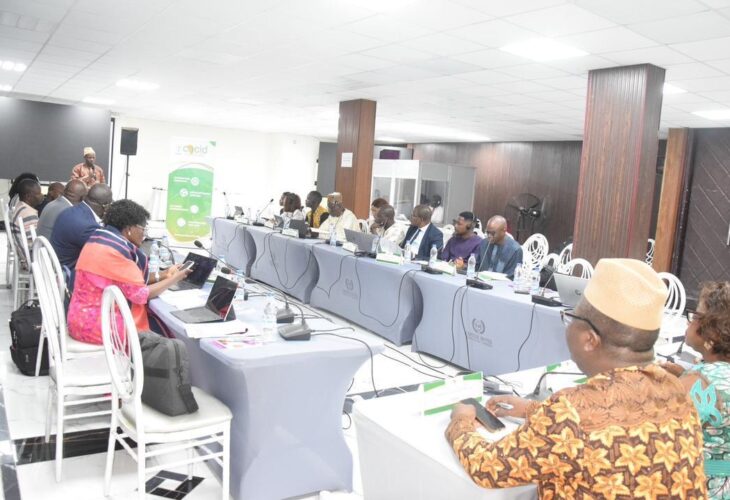
Stakeholders across West Africa have renewed calls for deeper regional integration and sustainable development following a two-day Multi-Stakeholder Dialogue on AfCFTA, Green Finance, and Energy Transition, held from July 25–26, 2025 in Abidjan, Côte d’Ivoire.
 The high-level forum, organized by ENDA CACID, brought together policymakers, private sector leaders, researchers, and civil society representatives to explore strategies for unlocking West Africa’s trade potential under the African Continental Free Trade Area (AfCFTA) while addressing sustainability challenges.
AfCFTA Progress and Opportunities
The dialogue opened with reflections on the status of AfCFTA negotiations and implementation tools such as the Pan-African Payment and Settlement System (PAPSS) and rules of origin. Speakers from Côte d’Ivoire, Senegal, and Ghana highlighted the importance of aligning ECOWAS trade instruments with AfCFTA to maximize regional competitiveness.
Participants also examined sectoral growth opportunities, with a special focus on the cosmetics industry, where West Africa has untapped potential in processing and value addition.
NANTS Contribution on Trade Policy
 Speaking during Session III, Mr. Benjamin Uzuegbu of the National Association of Nigerian Traders (NANTS)emphasized the need to harmonize ECOWAS Common External Tariff (CET), ETLS, and Investment Codes with AfCFTA frameworks. He noted that fragmented policies continue to limit traders’ participation in regional trade.
Uzuegbu also stressed that technical and financial partners must go beyond policy support to practical implementation that benefits small traders and MSMEs across the region.
Linking Trade, Environment, and Development
The second day of discussions focused on regional value chains, trade policy coherence, and sustainability linkages. Experts from Benin, Côte d’Ivoire, and Guinea examined how AfCFTA can be used to strengthen regional processing, distribution, and energy transition initiatives.
Sessions on green finance and energy transition underscored the urgent need for West African countries to access climate finance, invest in renewable technologies, and integrate environmental sustainability into trade strategies.
Key Outcomes
At the closing session, ENDA CACID’s Executive Director, Mr. Souleymane Barro, summarized the dialogue’s main takeaways, which included:
-
Harmonized regional trade instruments to support AfCFTA implementation.
-
Stronger alignment between ECOWAS and AfCFTA trade policies.
-
Greater private sector participation in regional integration.
-
Mobilisation of green finance for inclusive and sustainable growth.
Why It Matters for Traders
For Nigerian traders, the Abidjan Dialogue reaffirmed that AfCFTA offers significant opportunities, but real benefits will only come with:
-
Simplified customs processes,
-
Access to finance,
-
Harmonised trade rules, and
-
Support for small traders to scale into regional markets.
As NANTS continues to champion the voice of traders, the association remains committed to ensuring that regional trade agreements translate into practical benefits for everyday traders across West Africa.
